Weapon Cases
Navigation
1. Introduction
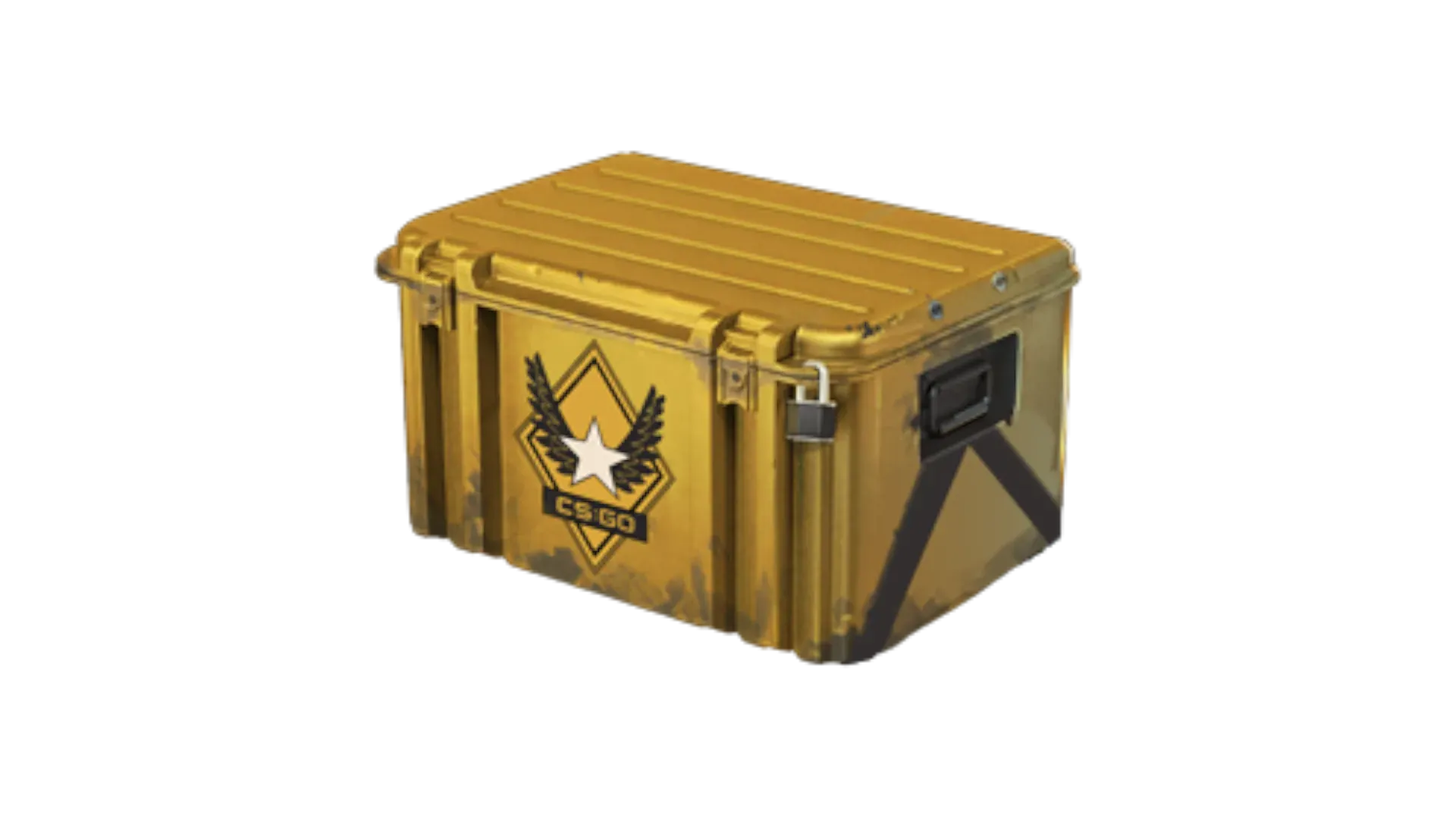
Cases - also referred to as crates - are the primary way players unbox new skins in Counter-Strike, much like loot boxes in other games. They play a major role in the Counter-Strike economy and were among the first items introduced to the game. Cases are classified as a subcategory of containers and can be opened by players using a matching key. During this process, both the key and the case are consumed and permanently removed from the player's inventory. In return you will receive one item from inside the case. Each case contains a predefined selection of skins, referred to as a collection, which is unique to that specific case. These skins are distributed across different rarity tiers – starting from Mil-Spec, going up through Restricted, Classified, and Covert, with a small chance of receiving an ultra-rare item, known as the Rare Special Item (such as knives or gloves). Rare Special Items are not technically part of a case’s collection. Instead, they exist as a separate tier that can be shared across multiple containers. For example, several cases may feature the same set of knives with the same finishes.
The rarer an item is, the higher its value tends to be and the lower the chance of unboxing it. However, rarity isn't the only factor that determines an item’s price. The skin design and the popularity of the weapon it’s applied to, and even specific finishes or patterns have influence on market value. A good-looking skin for widely-used weapon like the AK-47 or AWP will often fetch a higher price, even over rarer items for less-used weapons following the laws of supply and demand.
Keys can be purchased from the in-game shop for a fixed price. In the past, keys were tradable, but Valve removed this feature in 2019 with the Key Change Update. Since then, any key purchased through the in-game shop is permanently bound to the buyer’s account and can no longer be traded or resold. This is why you may still see keys listed on the Steam Community Market or third-party marketplaces. These are older, tradable keys that were bought before the update. However, you should not buy these with the intention of using them to open cases, as they are often more expensive than simply purchasing a new key from the in-game shop. These older keys are considered leftovers and are mainly of interest to collectors or traders. In short: they still exist on the market, but their higher price reflects their rarity and value as collector items - not their practical use.
Valve regularly adds new cases to the game, often releasing them alongside major updates, operations, or in the armory. As a result, older cases are gradually phased out and moved between different drop pools. This process is an important mechanic in the Counter-Strike ecosystem and will be explained in more detail later in this wiki. This system has a significant impact on case prices - so much so that many older cases have become more expensive over time. The limited supply combined with consistent demand makes cases one of the most popular long-term investments in the game. For a deeper look at this, check out the investing chapter.
1.1 Types of Weapon Cases
Cases can be distinguished by different criteria. Most of the time cases are grouped based on attributes such as price, drop pool, release date, or unboxing volume. If you're interested in exploring these figures in more detail, check out our market where you can apply filters and compare case data directly. To save you time, here are some quick links to commonly used filters:
- All Cases sorted by Price (Low to High)
- All Cases sorted by Release Date (Newest to Oldest)
- All Cases sorted by Trading Volume (High to Low)
In addition to sorting cases by key figures, there are additional ways to group cases. One is by color, which is more of a community-driven categorization rather than an official classification.
- Black Cases: Black cases are the earliest Valve-created collections, all of which require a CS:GO Case Key to open. Only four cases belong to this group: CS:GO Weapon Case 1, CS:GO Weapon Case 2, CS:GO Weapon Case 3, Operation Bravo Case
- eSports Cases (Blue, Orange and Green) eSports cases, also developed by Valve, serve a unique purpose. Opening these cases requires an eSports Key, with a portion of each key purchase supporting the Counter-Strike competitive scene through events, prize pools, and tournament infrastructure. Valve introduced them to help fund the esports ecosystem. However, since the last eSports case release on July 10, 2014, Valve has shifted away from this funding model. Today, major tournaments are primarily financed through the sale of tournament sticker capsules. You can learn more about this topic here.
- Yellow Cases: Yellow cases contain community-created weapon skins selected from workshop submissions. These cases need unique keys to open, and skin creators receive a share of the earnings, which can provide them with substantial income. In recent years, all new cases have been yellow cases, containing both Valve-designed and community-designed skins.
- Orange Cases: With the release of CS2, Valve redesigned weapon cases, replacing the traditional yellow design with a more modern orange one
Behind every new case release, there’s usually a reason why it was added to the game. Sometimes it’s something more trivial, like regular game updates but it can also be tied to bigger events like operations or the armory.
That means we can also differentiate cases with their release context. Here’s a quick overview:
Regular Game Updates
Adding cases during regular game updates is the most common way new cases enter the game. With the release of new cases, older ones often move to the rare or discontinued drop pool.
Operations are limited-time events that typically last a few months and introduce new content to the game, often including a new weapon case. Those cases are available for purchase / in exchange for operation stars during the event. Once the operation ends, they will either move to the rare drop pool like the Operation Hydra Case or the Operation Phoenix Case or be discontinued entirely. (Operation Riptide Case, Operation Broken Fang Case). In recent years the trend has been to discontinue the cases entirely. Either way they became a lot rarer afterwards making them great investments in the long run). With the introduction of the Armory it’s questionable wether we will ever see an operation again.
With the introduction of the Armory in Oktober 2024 Valve added an additional way to release new cases. Similiar to operations users require a the Prime Status Upgrade aswell as the Armory Pass to redeem their stars in exchange for new cases. The Gallery Case and the Fever Case are the first two cases in this category. What will happen to these cases after their removal from the Armory remains unsure until the first case gets removed.
- Design Contests
Some cases are the result of community-driven design contests, where selected entries are combined into a new case. The Dreams & Nightmares Case is a prime example, featuring 17 community-designed skins selected from over 15.000 submissions. Similarly the CS20 Case commemorated the 20th anniversary of Counter-Strike with community-created content
2. Quick Overview
2.1 Rare Special Item Collections
Every case contains a different set of Rare Special Items. We have no official information on this topic, but the community made their own list. This is basically a set of collections for Rare Special Items. So in order to understand which cases container which Rare Special Item Collection, we need to first define them:
| Knife Type | Available Knives |
| Gen 1 Knives (OG) | Vanilla, Bayonet, M9 Bayonet, Gut Knife, Karambit, Flip Knife |
| OG Finishes | Fade, Slaughter, Case Hardened, Crimson Web, Blue Steel, Safari Mesh, Stained, Urban Marked, Night, Scorched, Boreal Forest, Forest DDPAT |
| Gen 2 Spectrum Knives | Butterfly, Huntsman, Falchion, Shadow Daggers, Bowie |
| Gen 3 Knives (Horizon Knives) | Navaja, Talon, Stilleto, Ursus |
| Gen 4 Knives (Shattered Web Knives) | Nomad, Skeleton, Survival, Paracord |
| Classic Knife | Fade, Slaughter, Case Hardened, Crimson Web, Blue Steel, Safari Mesh, Stained, Urban Marked, Night Stripe, Scorched, Boreal Forest, Forest DDPAT |
| Chroma Finishes | Doppler, Marble Fade, Tiger Tooth, Rust Coat, Damascus Steel, Ultraviolet |
| Gamma Finishes | Gamma Doppler, Lore, Autotronic, Bright Water, Freehand, Black Laminate |
| Gen 1 Gloves | Sport Gloves: Pandora's Box, Superconductor, Hedge Maze, Arid Driver Gloves: Crimson Weave, Diamondback, Lunar Weave, Convoy Hand Wraps: Slaughter, Leather, Spruce DDPAT, Badlands Specialist Gloves: Crimson Kimono, Emerald Web, Foundation, Forest DDPAT Moto Gloves: Spearmint, Cool Mint, Boom!, Eclipse Bloodhound Gloves: Snakebite, Guerrilla, Charred, Bronzed |
| Gen 2 Gloves | Sport Gloves: Vice, Amphibious, Omega, Bronze Morph Driver Gloves: King Snake, Imperial Plaid, Overtake, Racing Green Hand Wraps: Cobalt Skulls, Overpint, Duct Tape, Arboreal Specialist Gloves: Fade, Crimson Web, Mogul, Buckshot Moto Gloves: POW, Polygon, Turtle, Transport Hydra Gloves: Emerald, Rattler, Mangrove, Case Hardened |
| Gen 3 Gloves | Sport Gloves: Scarlet Shamagh, Slingshot, Big Game, Nocts Driver Gloves: Snow Leopard, Black Tie, Rezan the Red, Queen Jaguar Hand Wraps: CAUTION!, Constrictor, Desert Shamagh, Giraffe Specialist Gloves: Marble Fade, Field Agent, Tiger Strike, Lt. Commander Moto Gloves: Blood Pressure, Smoke Out, Finish Line, 3rd Commando Company Broken Fang Gloves: Jade, Yellow-banded, Unhinged, Needle Point |
| Kukri Knife | Fade, Slaughter, Case Hardened, Crimson Web, Blue Steel, Safari Mesh, Stained, Urban Marked, Night Stripe, Scorched, Boreal Forest, Forest DDPAT |
3. History and Evolution
The history of cases starts with the infamous Arms Deal Update released on 14. August 2013, which added the first cases to CS:GO, namely the eSports 2013 Case and the CS:GO Weapon Case. Cases were met with mixed reactions, as the items were criticized by some players for being just a cosmetic change. Today it’s safe to say this update was one of the most important ones in the history of the game, marking the beginning of the skin economy as we know it today. Since then skins in general have been a huge success not only for Valve but also for players, traders, third-party businesses and everyone involved.
Valve has continously added new cases to the game slowing down over time, to currently 1-2 weapon cases each year. Valve has never been consistent with the releases of new weapon cases as they rarely announce new cases in advance
| Year | Number of Cases Released | Case Names |
| 2013 | 6 | CS:GO Weapon Case, eSports 2013 Case, Operation Bravo Case, CS:GO Weapon Case 2, eSports 2013 Winter Case, Winter Offensive Weapon Case |
| 2014 | 6 | CS:GO Weapon Case 3, Operation Phoenix Weapon Case, Huntsman Weapon Case, Operation Breakout Weapon Case, eSports 2014 Summer Case, Operation Vanguard Weapon Case |
| 2015 | 5 | Chroma Case, Chroma 2 Case, Falchion Case, Shadow Case, Revolver Case |
| 2016 | 5 | Operation Wildfire Case, Chroma 3 Case, Gamma Case, Gamma 2 Case, Glove Case |
| 2017 | 3 | Spectrum Case, Operation Hydra Case, Spectrum 2 Case |
| 2018 | 3 | Clutch Case, Horizon Case, Danger Zone Case |
| 2019 | 3 | Prisma Case, CS20 Case, Shattered Web Case |
| 2020 | 3 | Prisma 2 Case, Fracture Case, Operation Broken Fang Case |
| 2021 | 2 | Snakebite Case, Operation Riptide Case |
| 2022 | 2 | Dreams & Nightmares Case, Recoil Case |
| 2023 | 1 | Revolution Case |
| 2024 | 2 | Kilowatt Case, Gallery Case |
| 2025 | 1 | Fever Case |
Exact Release Dates:
Below you can find a table showcasing the release dates of every single case including their order, the release day and the wait time between each case
- Most recently added: Fever Case
- Average wait Time: 106.18 days
- Longest wait Time: 361 days
- Most common release day: Wednesday (last 15 cases was a friday)
| Order | Case | Release Date | Release Day | Comments | Wait Time |
| 1 | CS:GO Weapons Case | 14-Aug-13 | Wed | Arms Deal Update | – |
| 1 | ESports 2013 Case | 14-Aug-13 | Wed | Arms Deal Update | – |
| 3 | Operation Bravo Case | 19-Sep-13 | Thu | Operation Bravo | 36 |
| 4 | CS:GO Weapon Case 2 | 6-Nov-13 | Wed | Arms Deal Collection 2 | 48 |
| 5 | eSports 2013 Winter Case | 18-Dec-13 | Wed | Winter Offensive Update | 42 |
| 5 | Winter Offensive Weapon Case | 18-Dec-13 | Wed | Winter Offensive Update | 0 |
| 7 | CS:GO Weapon Case 3 | 12-Feb-14 | Wed | Arms Deal Collection 3 | 56 |
| 8 | Operation Phoenix Weapon Case | 20-Feb-14 | Thu | Operation Phoenix | 8 |
| 9 | Huntsman Weapon Case | 1-May-14 | Thu | 70 | |
| 10 | Operation Breakout Weapon Case | 1-Jul-14 | Tue | Operation Breakout | 61 |
| 11 | ESports 2014 Summer Case | 10-Jul-14 | Thu | 9 | |
| 12 | Operation Vanguard Weapon Case | 11-Nov-14 | Tue | Operation Vanguard | 124 |
| 13 | Chroma Case | 8-Jan-15 | Thu | 58 | |
| 14 | Chroma 2 Case | 15-Apr-15 | Wed | 97 | |
| 15 | Falcion Case | 26-May-15 | Tue | Operation Bloodhound | 41 |
| 16 | Shadow Case | 17-Sep-15 | Thu | 114 | |
| 17 | Revolver Case | 8-Dec-15 | Tue | R8 Revolver Release | 82 |
| 18 | Operation Wildfire Case | 17-Feb-16 | Wed | Operation Wildfire | 71 |
| 19 | Chroma 3 | 27-Apr-16 | Wed | 70 | |
| 20 | Gamma Case | 06/15/16 | Wed | 49 | |
| 21 | Gamma 2 Case | 18-Aug-16 | Thu | 64 | |
| 22 | Glove Case | 28-Nov-16 | Mon | 102 | |
| 23 | Spectrum Case | 15-Mar-17 | Wed | 107 | |
| 24 | Hydra Case | 23-May-17 | Tue | Operation Hydra | 69 |
| 25 | Spectrum 2 Case | 15-Sep-17 | Fri | 115 | |
| 26 | Clutch Case | 15-Feb-18 | Thu | 153 | |
| 27 | Horizon Case | 3-Aug-18 | Fri | Panorama Update | 169 |
| 28 | Danger Zone Case | 6-Dec-18 | Thu | Danger Zone Update | 125 |
| 29 | Prisima Case | 13-Mar-19 | Wed | 97 | |
| 30 | CS20 Case | 18-Oct-19 | Fri | 219 | |
| 31 | Shattered Web Case | 18-Nov-19 | Mon | 31 | |
| 32 | Prisma 2 Case | 1-Apr-20 | Wed | Shattered Web End | 135 |
| 33 | Fracture Case | 7-Aug-20 | Fri | 128 | |
| 34 | Broken Fang Case | 3-Dec-20 | Thu | Broken Fang Start | 118 |
| 35 | Snakebite Case | 3-May-21 | Mon | Broken Fang End | 151 |
| 36 | Operation Riptide Case | 22-Sep-21 | Wed | Riptide Start | 142 |
| 37 | Dreams and Nightmares Case | 21-Jan-22 | Fri | 121 | |
| 38 | Recoil Case | 1-Jul-22 | Fri | 161 | |
| 39 | Revolution Case | 10-Feb-23 | Fri | 224 | |
| 40 | Kilowatt Case | 6-Feb-2024 | Tue | 361 | |
| 41 | Gallery Case | 2-Oct-2024 | Wed | Armory Release | 239 |
| 42 | Fever Case | 31-Mar-2025 | Mon | Spring Update | 180 |
4. How to get new Weapon Cases
There are several options to get cases:
- Weekly Drop
- Steam Market / Trading / Third-party marketplaces
- Operations and Armory
Weekly Drop
In order to receive cases from the weekly drop, you have to meet a few requirements. Since the Adjustments to Non Prime update your account needs to have the Prime Status Upgrade, which can be purchased from the steam store. The upgrade not only makes it possible to receive the weekly drop but also improves the matchmaking experience as you can only get matched with other players which also own the Prime Status upgrade and gives you access to further upgrades like the Armory Pass or the Major Viewer Pass. After you purchased the upgrade, you will have to level up your XP Rank by playing on official matchmaking servers. You will receive your weekly drop with the first XP up rank of the week. So the maximum amount of cases you can receive is one weapon case per week per account.
Valve updated the drop mechanic several times over the last years. Until 6th March 2021 it was possible to receive case drops from the Non-Prime Drop Pool without having the Prime Status Upgrade. As mentioned the Adjustments to Non Prime update however, those cases moved to the rare drop pool and players without prime cant receive cases anymore. Also the drop mechanic was different before the update on 6th September 2023.
Steam Market / Trading / Third-party marketplaces
Those are the best options if you want to get a lot of cases in a short amount of time. You can purchase any amount of cases from steam or third-party marketplaces for their current market price. You can also trade items with your friends or trusted traders. We dont recommend trading with other players unless you know who you are dealing with, because there are a lot of bad actors around and you can easily get scammed. Same goes with third party marketplaces. Make sure to only login and use trusted sites. You can find a list of known marketplaces here.
Operations and Armory
Operations and the Armory are another good source for the limited-time cases tied to the event. In order to receive cases you need to purchase the operation pass or the armory pass. This allows you to farm stars by completing missions or getting XP from playing on official matchmaking servers. Those stars can be redeemed for cases in the Armory/Operation shop. Typically the price is two stars per case.
4.1 Case Farming
Since you can basically receive items for free just by playing the game a lot of people started to farm drops on multiple accounts. This can be done manually by playing matches on multiple accounts until you receive your drop, which is a fun and easy way to earn some extra money. Or you can fully automate the process using advanced scripting, servers and additional software to control your farming bots. Disclaimer: Automated case farming is against Steam TOS and we don’t promote it or provide any ressources or information on how to setup a case farm.
However it’s important to know about the existence of case farming and to which extent it influences case supply and prices. Before the Adjustment’s to Non Prime Update it was basically free to farm cases, you could just register thousands of accounts and farm with the respective software in place. After the update you need at least the Prime Status Upgrade, which makes the upfront investment higher and also makes it less attractive to farm cases, since your accounts can always get banned. The introduction of CS2 made it harder to farm cases, since you now need to have an Instance of CS2 running which requires a GUI. So Valve did make it harder for big bot farms and is also continously banning farmers but we can assume that there are still many farmers out there exploiting the drop system. Those farms increase case supply and keep case prices down. We can assume that without case farming at all, prices would be significantly higher than where we are right now.
5. Opening vs. Renting Cases
Case opening is very popular among the CS2 playerbase. Many Youtubers and streamers are doing regular case openings especially when new skins are released. In order to open a case the player has to first own the case which he received via one of the described ways. The case will then appear in your inventory until you sell, trade or open it. To open the case click on it and select open case. The next screen will present you with the option to either rent or open the case. If you select open you have to first buy a key unless you already have one. You can then use the key and open the case. You will see the opening animation and receive the item it lands on. If you see the Rare Special Item symbol you are guaranteed to get it.
Keys can always be bought for a fixed price from the in-game store. Keys can only be used once and are used up after opening a case. As mentioned earlier the game also let’s you rent skins from a certain case. So instead of Open to Keep, you have to click Open to Rent. This also consumes the key and the case. In return you receive every skin in the case excluding the rare special items in a random condition for seven days. Meaning you can get lucky and receive the skin in Factory New but also in Battle-Scarred. You can then equip the skins and use them in-game. After the seven days passed the item will automatically disappear from your inventory. Renting is far less popular then opening but can be a good alternative to try out new skins, especially at new releases when prices are still very high.
How the outcome is determined
When opening a case the outcome is completely determined by randomness within the case collection. So it’s not only the item which get’s randomly picked from the collection set depending on the rarity but also:
- Float value
- Category (StatTrak or Normal)
- Pattern Index
Float Value
Every weapon skin has a minimum and a maximum float value within 0 and 1. There majority of skins have 0 as min and 1 as their max. That’s also the reason why some skins dont exist in a certain condition. Let’s have a look at the Mac-10 Sakkaku for example. It has a minimum float of 0.21 and a maximum float of 0.79. So naturally you cant receive the item in Factory New or Minimal Wear condition. For reference, here’s the wear value table.
| Float Range | Wear/Condition |
| 0.00 - 0.07 | Factory New |
| 0.07 - 0.15 | Minimal Wear |
| 0.15 - 0.38 | Field-Tested |
| 0.38 - 0.45 | Well-Worn |
| 0.45 - 1.00 | Battle-Scarred |
When a case is opened by a player the unboxed item will have a random float value between the min and max number. It's not ceompletely random, the float value distribution follows certain rules. There are no official numbers from Valve so we rely on community data once again. There was an excellent analysis done by csfloat which examined this topic. In summary their findings led to the following distribution for skins with min float 0 and max float 1:
| Wear | Probability |
| Factory New (0.00-0.07) | ~3% |
| Minimal Wear (0.07-0.15) | ~24% |
| Field-Tested (0.15-0.38) | ~33% |
| Well-Worn (0.38-0.45) | ~24% |
| Battle-Scarred (0.45-1.00) | ~16% |
Category
Category is much simpler than the other two parameters. The relation between Normal and StatTrak is 10 to 1. So 1 of every 10 skins is a stattrak version
Paint Seed/Pattern Index
The paint seed determines the exact placement of a skin’s patter/texture on a weapon. It's a number between 1 and 1000 that's used as an input for a random number generator, influencing the shift and rotation of the skin and wear textures. Think of it as a seed for the "randomness" of a pattern. Each skin with a paint-based pattern has a unique paint seed. From cases you can actually receive only paint seed from 1-999. Paint seed 1000 can only be received from tradeups. The effect of the paint seed varies depending on the skin. Some skins have noticeable pattern variations based on the seed (like AK-47 | Case Hardened), while others may have less visible differences.
5.1 The X-Ray System
On 30th September 2019 Valve released the X-ray scanner update in France to address changes in government regulations. The X-ray Scanner allows users to reveal the item inside any container and consume the container during the process. The X-ray scanner comes preloaded with a one-time exlusive non-tradable item - the P250 | X-Ray. Users must first claim this item to use the x-ray scanner again which is a general rule: Before scanning another item, the revealed item has to be claimed. French users can also no longer buy cases from the Steam Community Market but selling still works. The X-ray scanner was introduced as a workaround for government regulations

6. The Case Market
The economy of the Counter-Strike market operates on fundamental principles of supply and demand. Players can freely determine a price which they want to charge for their items. If no other users is willing to pay your price, you would have to lower the price until your item gets sold. This leads to a market price which also fluctuates over time. A lot of the case trading still happens on the SCM, cases are continously at the front page of the steam community market. Many players are selling off their weekly drops because for such cheap items the effort is not worth it to list on a 3rd party marketplace. The manual effort for selling large amount of cases is often rather high.
Supply Dynamics:
Case supply in the market is determined by several factors:
- Weekly Drop Rates
- Ease of Selling
- Case Farming
- Investors selling of their stock
Supply is generally a long-term force. Shifts in drop rates or farming trends often take weeks or months to significantly impact market availability.
Demand Dynamics:
- Unboxing Hype
- Investor Demand/FOMO buying
- News/Game Updates
- Case popularity
Because buying is easier and faster than selling, sudden spikes in demand often lead to sharp price increases before supply can catch up.
Historical price developments
For years, many cases traded at the minimum Steam Market price of $0.03. This began to change after the Adjustments to Non-Prime update, which limited case drops to Prime users, reducing the number of new cases entering the market and tightening supply. Also Case farming was very much impacted by this update. Supply couldn’t match the ongoing demand for cases and prices slowly started to rise. Unless Valve introduces significant changes to the drop system it’s very much likely that we will never see prices at 3 cents ever again.
7. Case Investing
7.1 Why is Case Investing so popular?
Why is case investing so popular?
Cases are one of the most popular and widely discussed investments in the Counter-Strike economy. While browsing YouTube, Reddit or Twitter you’ll come across a lot of threads, guides, and analysis videos focused on case investing. Cases are a reliable asset in the market due to a number of reasons:
1. Proven Historical Growth
Over the years, many cases have shown consistent, long-term growth. Even cases that once sold for just a few cents have climbed in price as they moved to different drop pools, which reduces the new supply to almost zero while the demand only sightliy decreases. Unlike skins, whose prices can be volatile at times, cases tend to follow more predictable patterns.
2. Easy to Understand
The mechanics behind case prices aren’t complex, Cases are not hard to understand. Their price follows the fundamental laws of supply and demand. Investors can track the number of cases being unboxed, monitor drop rates, and compare historical prices across platforms.
3. Discontinued Supply, Ongoing Demand
One of the most powerful drivers for case prices is the drop pool system. Valve regularly rotates cases in and out of active drops. Once a case is moved to the rare drop pool, it becomes significantly more unlikely to be dropped. This creates a bottleneck. While the supply is reduced to a bare minimum the demand often continues, especially if the case contains popular or high-tier skins. This dynamic - limited new supply + steady or rising demand - is textbook economics for price increase.
4. Accessible and Scalable
Cases are also a great starting point for people who want to get into CS investing without spending hundreds of dollars. You can start with a small budget and slowly build your position over time. If you want to upgrade your investing game there’s plenty of volume and liquidity in the case market to support bulk investing, especially through third-party marketplaces.
7.2 How to invest in Cases?
All in all, getting started with case investing isn’t very complicated. Before jumping in, you should answer two key questions:
1. What is my budget? This is the most important question, and your golden rule should always be:
Only invest what you're willing to lose.
While case investing can be profitable, it’s also high-risk, but that comes with investements in Counter-Strike in general. The core issue is that you technically own your items. They exist on Valve’s servers, and Valve has full control. They could change drop systems, market rules, or even make items untradeable in the future. Always keep that in mind.
2. Which Case should I Invest in?
This is already more difficult to answer. There are two main approaches:
- Go with Your Gut
Some investors follow their intuition or trends and choose cases based on what feels like a smart pick, or what they’ve seen people talking about. This can work, especially if you’re active in the community and understand what’s getting attention.
- Use Data and Research
A more analytical apporach would be to have a look at relevant data and analyze it in order to make an informed investing decision
Here are some of the most useful data points:
- ROI (Return on Investment): How much return can the user expect when opening the case?
- Unboxing Rates: How many of this case are being opened monthly?
- Drop Pool Status: Is it still actively dropping, or has it been moved to the rare pool?
- Release Date: Especially interesting if you are looking at cases from the common active drop pool, which might be moved to the rare drop pool next
- Items Inside: Does it contain popular or high-tier skins (e.g. Ak-47 | Neonrider, Butterfly Knife)?
3. Buying and Storing Your Investment
Once you’ve chosen a case and a budget, it’s time to buy.
- Where to Buy: You can purchase cases directly from the Steam Market (never deposit directly on steam, buy a skin on a third party marketplace and sell it on steam and use the money from the sale to buy cases - this will safe you a lot of money) or through third-party marketplaces.
- Storage Strategy: After buying, many investors move their cases into Storage Units. This keeps your inventory clean, organized, and can even help psychologically—out of sight, out of mind. Case investing is about patience.
Now it’s time to wait. Cases are a long term investment. Price growth can take months or even years.
8. Case Opening Odds
With the release of CS:GO in China on September 11, 2017, by Perfect World, the team provided details on the probabilities for item qualities in cases, in compliance with regulations from the Ministry of Culture. This policy required that Chinese video games featuring lootboxes must disclose their odds. Below are the expected odds when opening weapon cases in both relative percentages and absolute numbers:
Odds in Percentages
| Rarity | Normal | StatTrak | Combined |
|---|---|---|---|
| Mil-Spec | 71.928% | 7.992% | 79.92% |
| Restricted | 14.382% | 1.598% | 15.98% |
| Classified | 2.88% | 0.32% | 3.2% |
| Covert | 0.576% | 0.064% | 0.64% |
| Rare Special | 0.234% | 0.026% | 0.26% |
Odds in Absolute Numbers
| Rarity | Normal | StatTrak | Combined |
|---|---|---|---|
| Mil-Spec | 1 in 1.39 | 1 in 12.51 | 1 in 1.25 |
| Restricted | 1 in 6.95 | 1 in 62.58 | 1 in 6.26 |
| Classified | 1 in 34.72 | 1 in 312.50 | 1 in 31.25 |
| Covert | 1 in 173.61 | 1 in 1562.50 | 1 in 156.25 |
| Rare Special | 1 in 427.35 | 1 in 3846.15 | 1 in 384.62 |